How AI Is Reshaping the UX Research Toolkit
- Philip Burgess
- Aug 21, 2025
- 3 min read

By Philip Burgess - UX Research Leader
In the ever-evolving landscape of UX research, artificial intelligence isn’t just a trend—it’s a transformation. From streamlining analysis to unlocking new capabilities, AI is redefining how researchers work, where we spend our time, and what’s possible within our processes.
From Labor-Intensive to Lightning Fast
Historically, UX research has been time-consuming. Transcribing interviews, synthesizing insights, coding data, and writing reports could take weeks. AI is flipping that script.
Today, tools like Otter.ai, Fireflies, and Descript transcribe audio in real time with surprising accuracy. AI-powered platforms such as Dovetail, Aurelius, and Condens now assist in clustering qualitative data, identifying sentiment, and even drafting insights—all in minutes instead of hours or days.
Instead of spending days parsing through quotes, researchers can focus their energy on interpretation, stakeholder communication, and strategic alignment.
Smarter Discovery, Faster
AI is also boosting discovery phases. Need to understand how users talk about a pain point? Tools like ChatGPT, Perplexity, or custom GPTs can quickly scan public forums, support tickets, or large text corpora and return synthesized overviews. These insights are helping researchers identify patterns, explore hypotheses, and shape early-stage questions more efficiently.
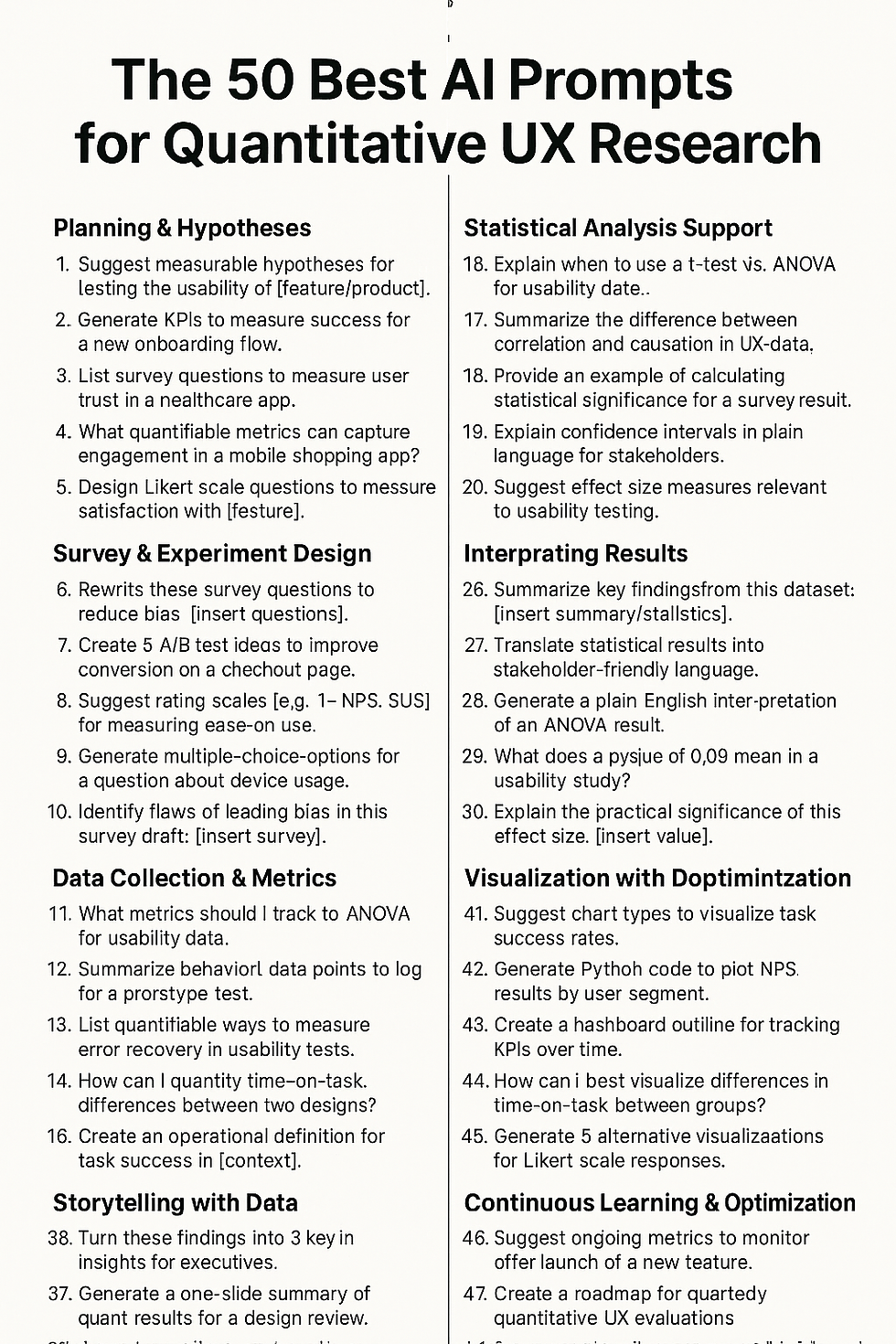
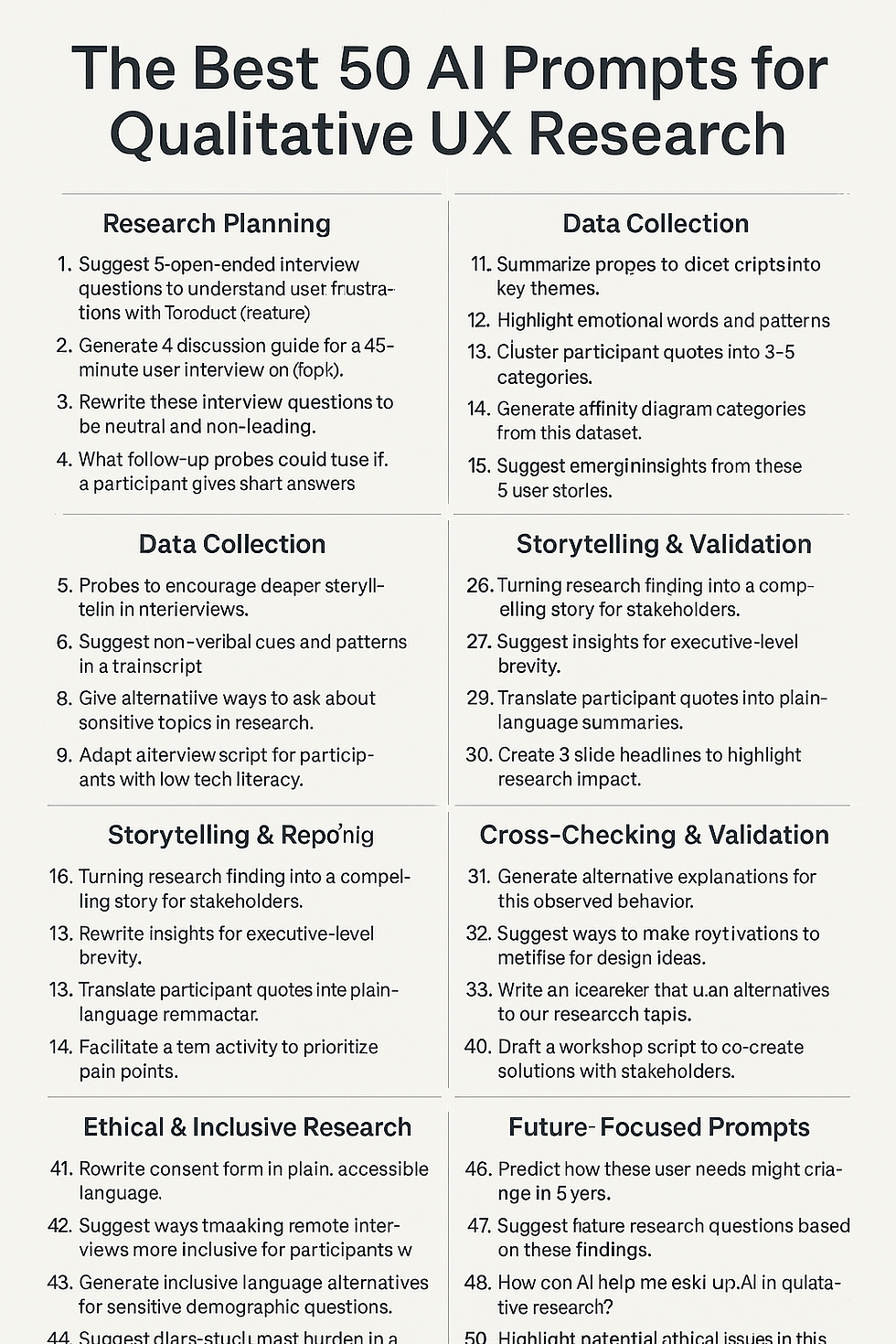
Some researchers are even using AI to generate research prompts, screener questions, or survey drafts, cutting setup time dramatically.
Quant Meets Qual: A Unified Analysis Powerhouse
AI’s biggest promise lies in its ability to bridge qualitative and quantitative insights. Tools are emerging that can:
Summarize open-ended survey responses into theme clusters.
Spot anomalies across heatmaps or analytics dashboards.
Correlate behavioral patterns in large-scale studies.
This kind of synthesis allows for richer storytelling and more robust triangulation of findings—without requiring a full data science team.
Researchers as Prompt Architects
AI isn’t replacing researchers—it’s changing their roles. We’re evolving from extractors of insights to curators of meaning and architects of prompts.
Knowing what to ask an AI tool, how to validate what it returns, and when to use human judgment becomes the new craft. Great researchers aren’t those who ask ChatGPT to “summarize interviews”—they’re the ones who prompt it to "group participant statements about onboarding friction, then return 3 potential design directions based on user priorities."
The Limits (and Ethics) of AI in Research
Despite the hype, AI tools aren’t magic. They:
Can hallucinate or invent findings.
Struggle with nuance, sarcasm, or cultural context.
Require rigorous human oversight to ensure validity and ethical responsibility.
Researchers must ensure participants are informed if AI is used in synthesis, and that insights derived from AI analysis don’t replace first-hand empathy.
The New UX Research Toolkit (AI Edition)
Here’s a snapshot of the evolving AI-augmented toolkit:
Task | AI-Enabled Tools |
Transcription | Otter.ai, Fireflies, Descript |
Synthesis | Dovetail, Aurelius, Condens, Grain |
Prompting & Exploration | ChatGPT, Claude, Perplexity, Gemini |
Survey/Open Text Analysis | Qualtrics Text iQ, SurveyMonkey Genius |
Video Highlight Reels | tl;dv, Grain, Loom with AI highlights |
Repository Tagging & Search | EnjoyHQ, Notably, Dovetail AI |
Final Thought
AI is a powerful new ally for UX researchers—but it’s still a tool, not a substitute for human curiosity, empathy, and critical thinking. The real opportunity isn’t in replacing research—it’s in elevating it.
As researchers, we now have the freedom to do more of what matters: guiding strategy, shaping vision, and advocating for the human experience at every turn.

Comments