The Best AI Prompts to Use for UX Research
- Philip Burgess
- Aug 20, 2025
- 2 min read

By Philip Burgess - UX Research Leader
How to Ask Smarter Questions in an AI-Augmented Workflow
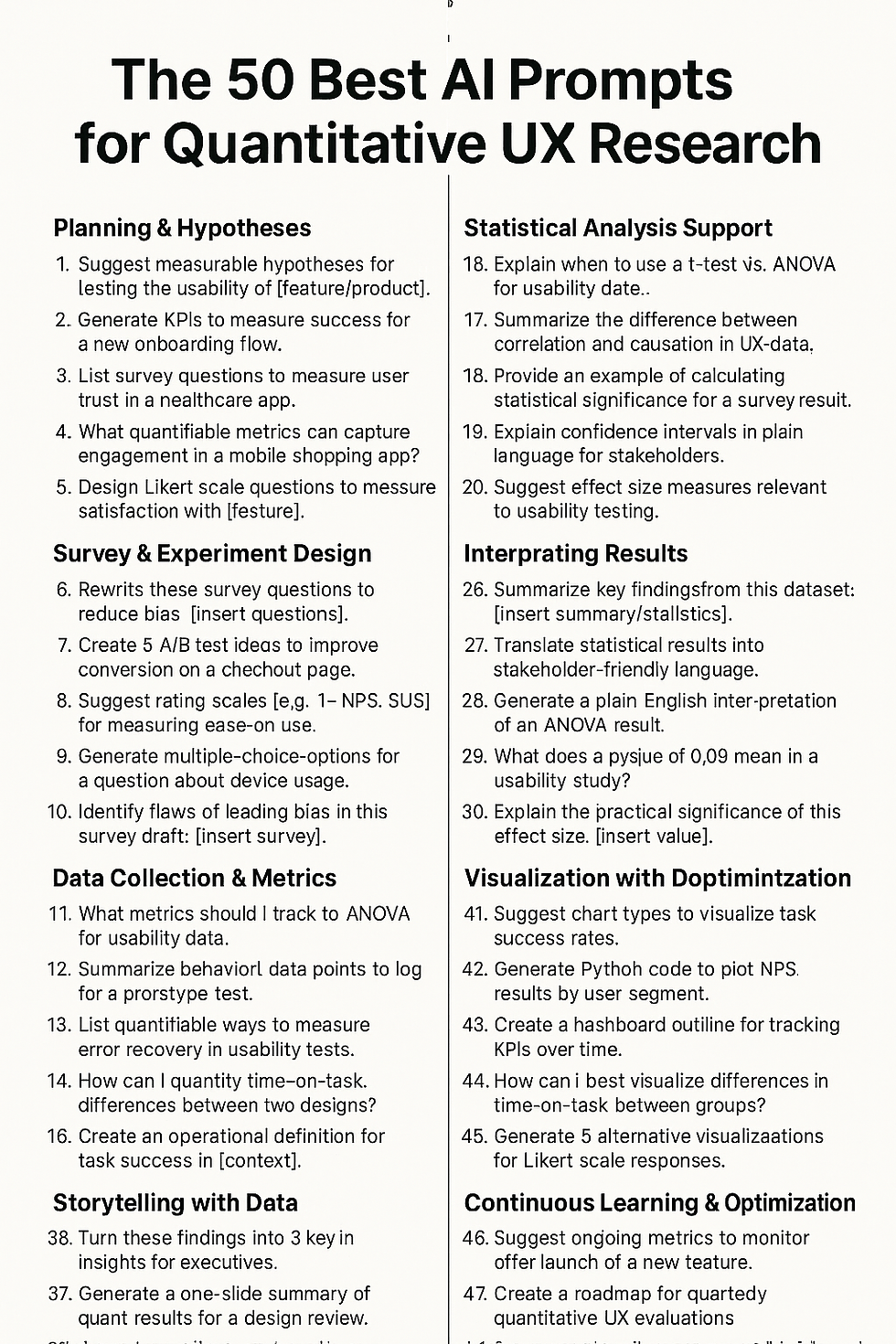
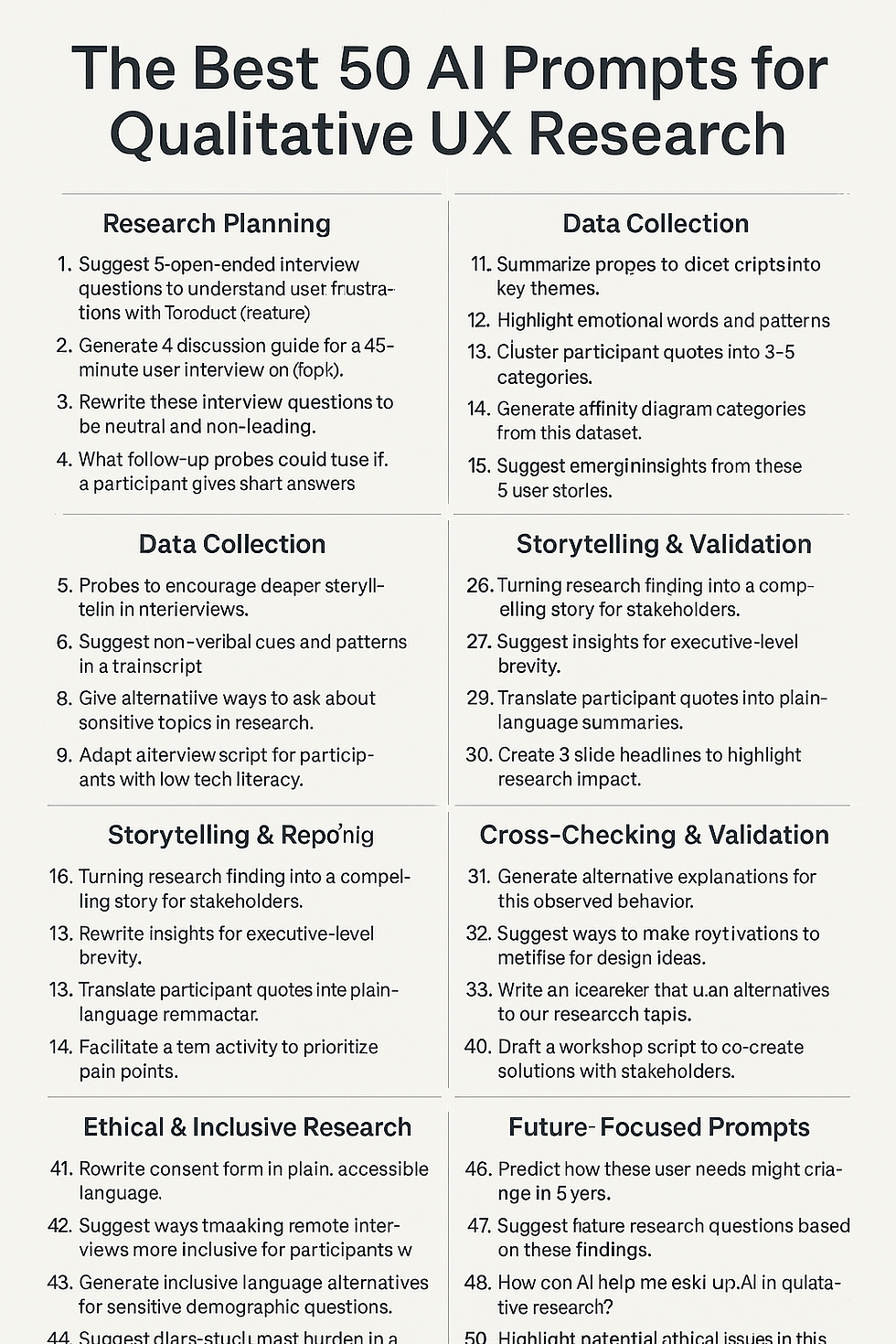
As UX research evolves in tandem with AI, the way we ask questions is changing. Prompts—whether used in generative tools, synthesis engines, or stakeholder conversations—are becoming the new currency of insight. But not all prompts are created equal.
The best prompts don’t just extract data. They unlock meaning.
Whether you're guiding AI tools to generate personas, summarize interviews, or explore behavioral patterns, the quality of your prompt determines the quality of your output. Here’s how to craft prompts that elevate your research practice.
1. Prompts for Synthesizing Qualitative Data
When working with transcripts, open-ended survey responses, or diary studies, use prompts that guide AI toward thematic clarity and emotional nuance.
Examples:
“Summarize recurring themes in these user interviews related to trust and usability.”
“What emotional language do participants use when describing onboarding?”
“Cluster responses by motivation and frustration.”
Why it works: These prompts focus on patterns, tone, and user sentiment—areas where AI can accelerate synthesis but still needs human framing.
2. Prompts for Persona Development
AI can help generate draft personas, but the prompt must be specific and grounded in real data.
Examples:
“Based on this dataset, create three user personas with distinct goals, behaviors, and pain points.”
“Highlight differences in decision-making styles between novice and expert users.”
“Generate a persona for a user who abandons the checkout process due to trust concerns.”
Why it works: These prompts push beyond demographics and into behavioral archetypes—critical for actionable design.
3. Prompts for Journey Mapping
Use prompts to visualize user flows, identify friction, and surface emotional highs and lows.
Examples:
“Map the user journey from discovery to purchase, highlighting key decision points.”
“Identify moments of delight and frustration in the onboarding experience.”
“What steps in the journey are most vulnerable to drop-off?”
Why it works: These prompts help AI structure complex experiences into digestible narratives, which researchers can then refine.
4. Prompts for Stakeholder Alignment
AI can help translate research into language that resonates with product, design, and executive teams.
Examples:
“Summarize key insights from this usability study for a product manager.”
“Create a one-slide executive summary of user pain points in the mobile app.”
“Draft a stakeholder email explaining why users are abandoning the dashboard.”
Why it works: These prompts bridge the gap between research and action—making insights more accessible and persuasive.
5. Prompts for Ethical and Inclusive Design
Use prompts to surface blind spots and challenge assumptions.
Examples:
“What accessibility concerns might arise from this design pattern?”
“How might this onboarding flow exclude neurodiverse users?”
“Identify cultural biases in this survey language.”
Why it works: These prompts help researchers proactively address equity and inclusion—areas where human oversight is essential.
Final Thought
In an AI-augmented research environment, prompts are more than commands. They’re strategic tools for framing inquiry, guiding synthesis, and amplifying empathy. The best prompts reflect the mindset of a great researcher: curious, precise, and human-centered.
Craft your prompts like you craft your questions—with intention, clarity, and care. Because in the future of UX research, how you ask is just as important as what you ask.

Comments