The Difference Between AI-Powered Research and Traditional UX Research
- Philip Burgess
- Aug 21, 2025
- 2 min read

Philip Burgess - UX Research Leader
As artificial intelligence (AI) continues to enter the UX world, many researchers are asking: What exactly is the difference between AI-powered research and traditional UX research? Are we evolving or replacing our practice?
The answer lies not in opposition—but in augmentation.
Traditional UX Research: Depth Through Human Empathy
Traditional UX research is rooted in human-centered principles. Whether it's moderated interviews, contextual inquiries, or diary studies, the value lies in the researcher’s ability to:
Build rapport with participants
Ask follow-up questions based on emotion or tone
Interpret body language and hesitation
Notice subtle inconsistencies or surprises
This type of research takes time. Planning, recruiting, conducting sessions, analyzing transcripts, coding data—it’s a manual and interpretive process that prioritizes context and empathy over speed.
It’s also deeply iterative. Researchers use intuition, stakeholder alignment, and lived experience to refine methods and interpret findings. Traditional research helps teams uncover why users behave the way they do, and it anchors design in real human need.
AI-Powered UX Research: Scale Through Speed and Structure
AI-powered research introduces speed, pattern recognition, and scale into the research process. Using tools like ChatGPT, Dovetail AI, Maze, and Hotjar AI summaries, researchers can:
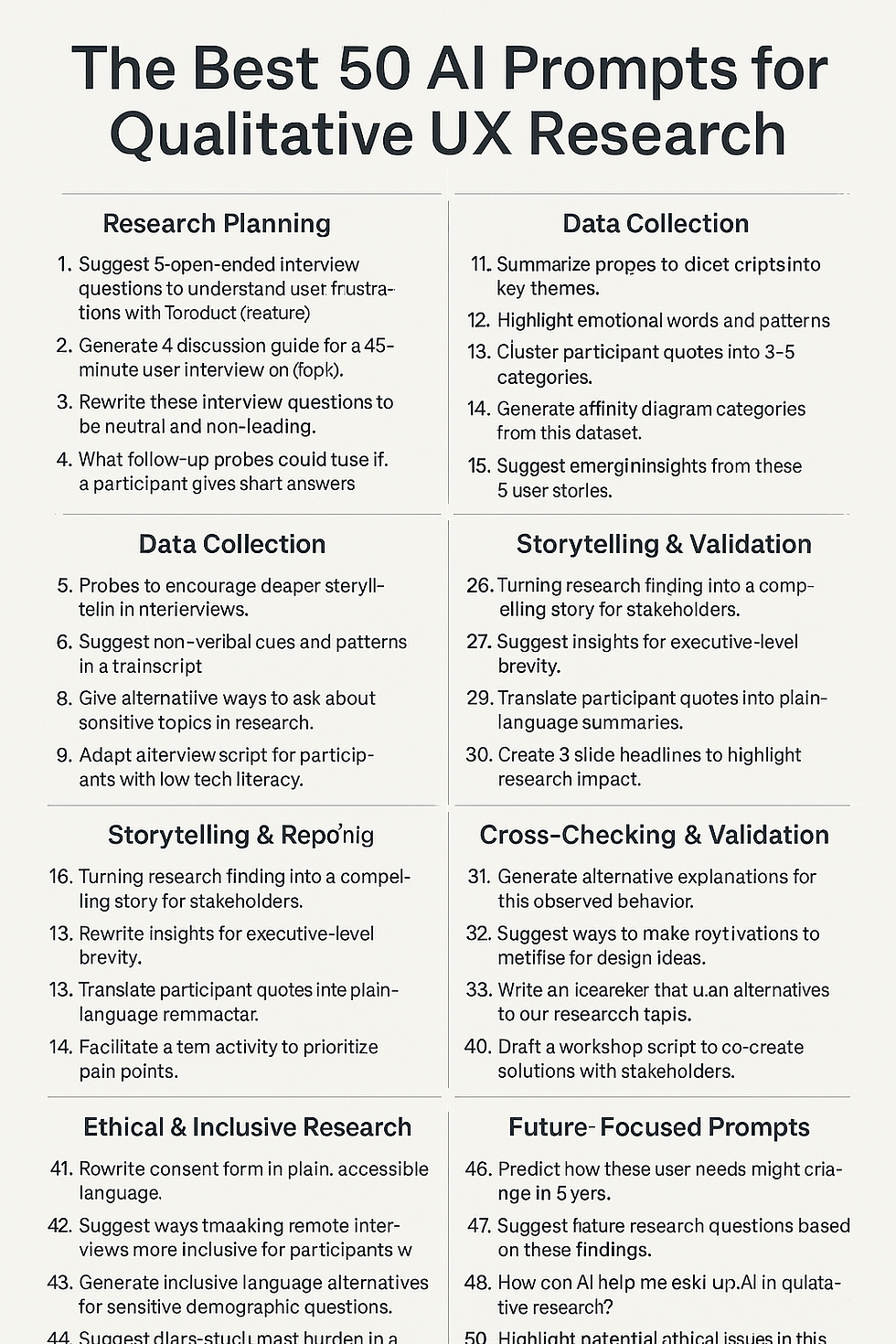
Transcribe and summarize interviews instantly
Group qualitative feedback into clusters
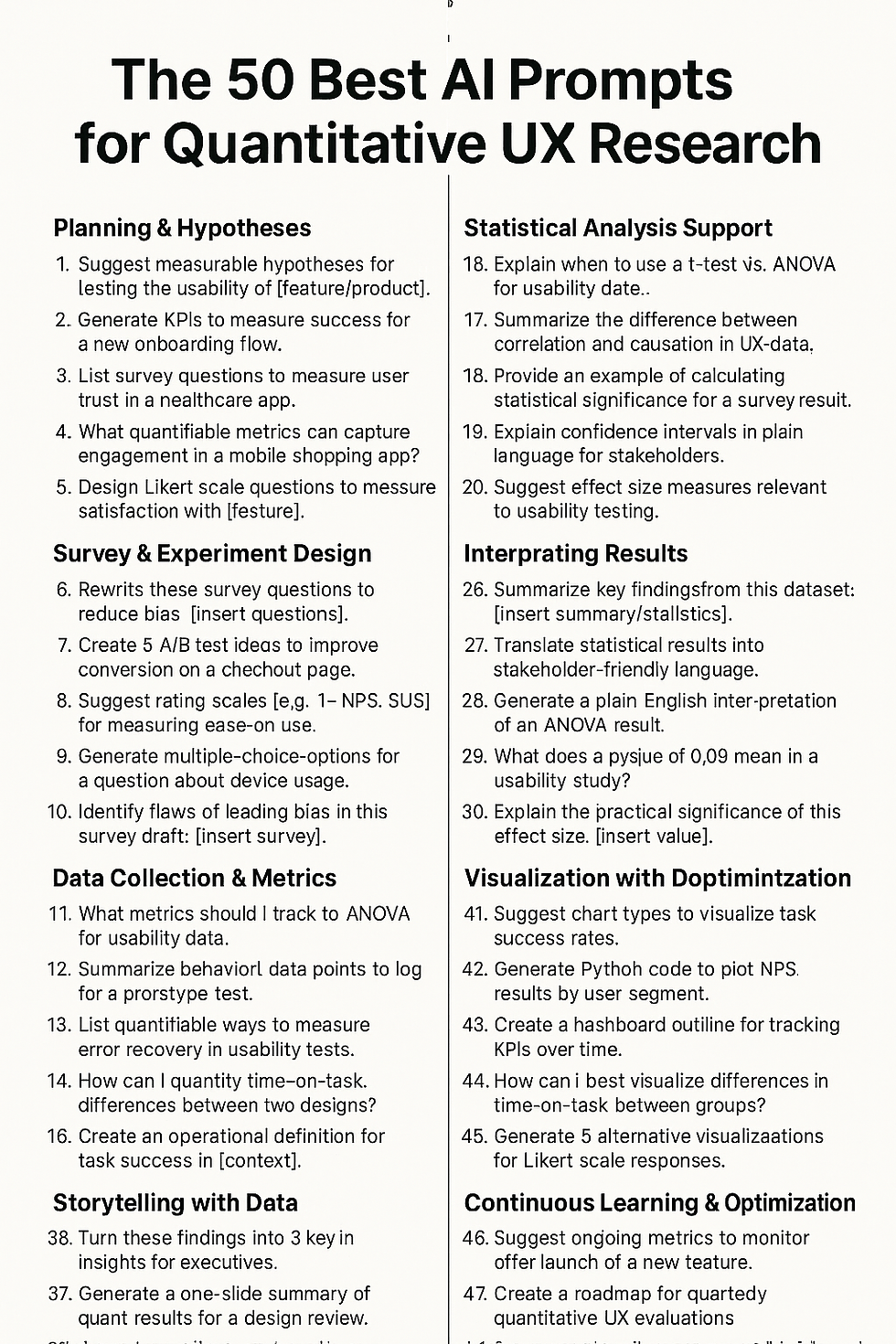
Generate surveys, screeners, and discussion guides
Analyze open-ended text responses from thousands of users
Surface behavioral patterns from massive datasets
AI doesn’t replace the researcher—it supercharges the workflow. It handles the repetitive tasks, freeing up time for insight generation, storytelling, and strategic decision-making.
It also opens new doors: researchers can now mine millions of support tickets, scan product reviews at scale, or test early design ideas with global audiences in hours, not weeks.
Human-Centered vs. Machine-Augmented
Here’s a simple side-by-side comparison:
Traditional UX Research | AI-Powered UX Research | |
Speed | Slower, manual processes | Fast, automated with AI |
Scale | Small N, deep engagement | Large N, rapid synthesis |
Empathy | Researcher-led interpretation | AI can miss nuance or tone |
Flexibility | High—can pivot in-session | Limited—structured prompts & outputs |
Cost | High (time + budget) | Lower for scaled tasks |
Insight Depth | Deep, contextualized | Broad, trend-driven |
Bias Handling | Researcher reflexivity & awareness | May inherit algorithmic bias |
Use Cases | Exploratory, generative, usability | Surveys, support logs, large data pools |
When to Use Each Approach
Use traditional UX research when:
You need emotional nuance and in-the-moment reactions
You're exploring complex or sensitive topics
Stakeholders need real human stories to build empathy
You’re testing prototypes and observing usability friction
Use AI-powered research when:
You’re working with massive datasets (e.g., open survey comments, reviews)
You want to accelerate early discovery or synthesis
You need rapid iteration or global input
You want help drafting, summarizing, or clustering qualitative data
It’s Not Either/Or—It’s Both/And
The future of UX research is not a choice between human or machine—it’s a partnership. AI can make research more accessible, repeatable, and scalable. But the heart of UX still belongs to people.
Great researchers will leverage AI not to replace empathy, but to amplify their ability to deliver it at scale.

Comments